
News
News
- What is a sacrificial anode
- Basic requirements for reference...
- What does the reference electrode do...
- Why are zinc blocks attached to the ...
- What is the principle of impressed...
- What material does metal structure...
Contact
Phone:18739187123
hotline:0391-7588881
E-mail:970512272@qq.com
Address:Wuzhi County, Jiaozuo City, China
Company News
Cathodic discharge protection for buried pipeline of DC electrified railway
- Author:Libo
- Source:wwww.curlysworldoffreeware.com
- Date:2021-06-11
- Click:0
Technical name: Stray current discharge protection
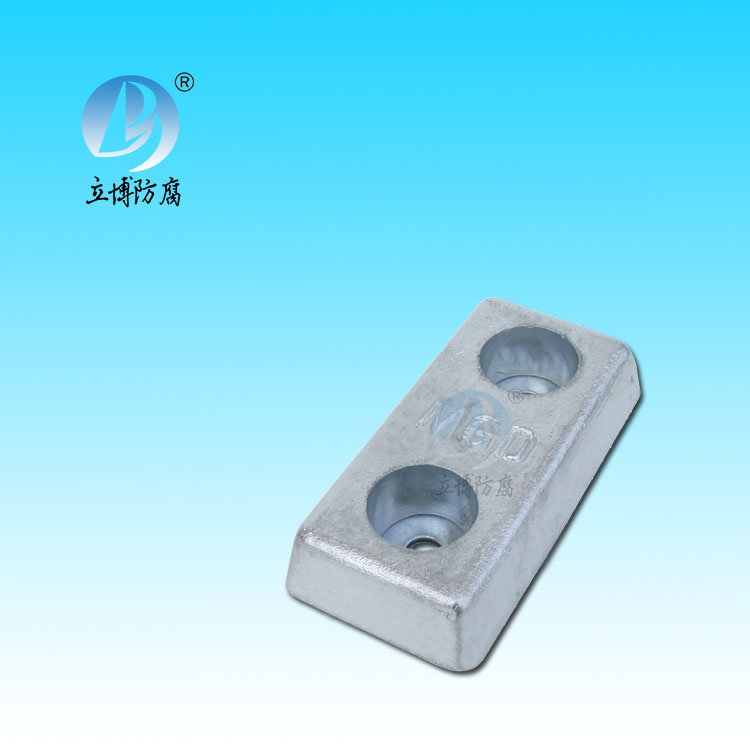
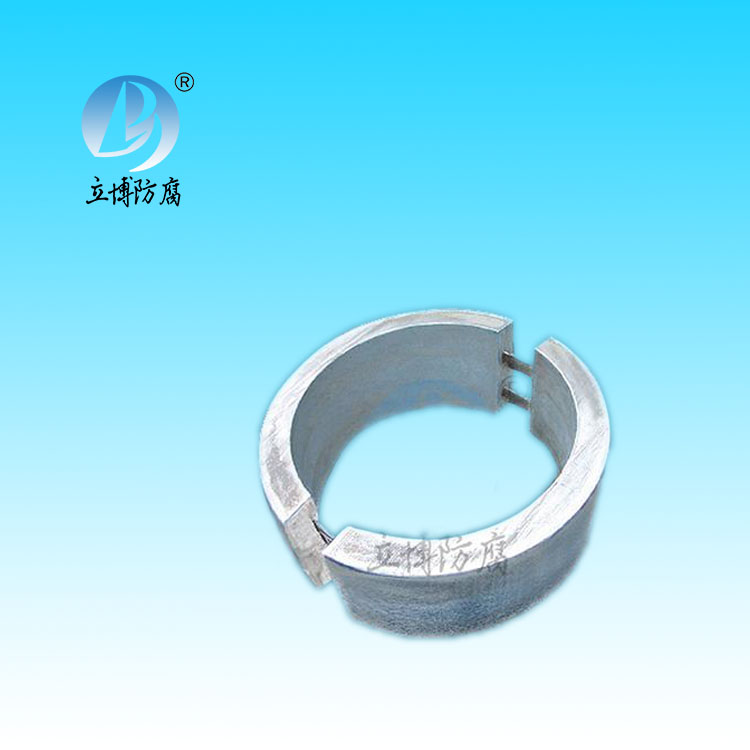
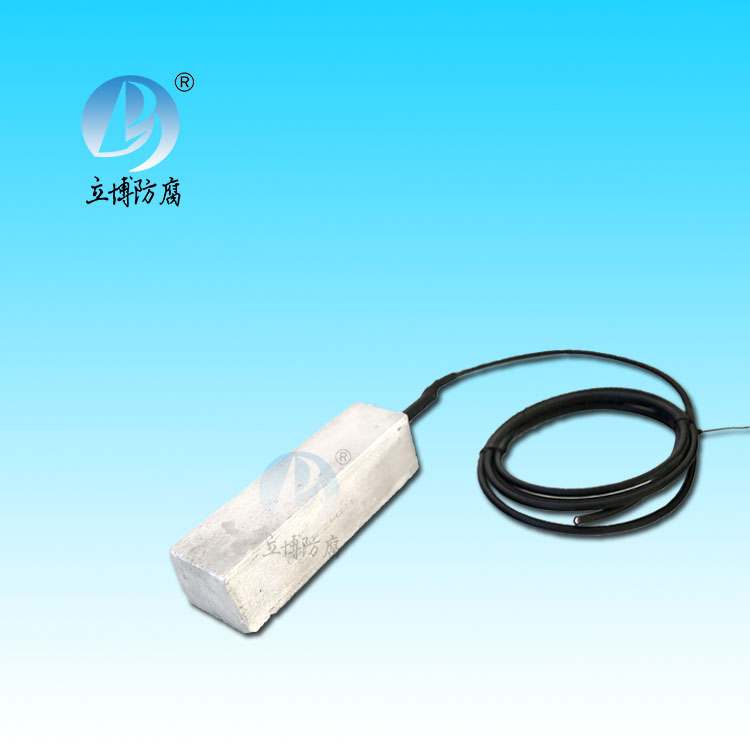
Protection method: sacrificial anode cathodic protection
Material: magnesium alloy sacrific anode buried long - acting copper sulfate reference electrode
Stray current corrosion and protection of DC electrified railway
Abstract: The harm, principle, influencing factors and detection methods of stray current electrochemical corrosion in urban rail transit system are comprehensively analyzed and introduced, which provides reference and basis for taking targeted measures in urban rail transit system design.
Keywords: rail transit, stray current, corrosion and protection, electrochemistry
With the continuous development of national economy, every city in Our country has accelerated the construction of urban rail transit in order to ease the increasingly serious urban traffic pressure. At the same time, in order to keep the city beautiful, the water supply, gas pipeline, power supply and communication cable are mostly buried or concealed laying underground, the urban rail stray current on the corrosion of these pipelines and cables and the corresponding prevention and control methods have become a concern. Strengthening the research on the stray current corrosion hazard and its prevention method is of great practical significance to ensure the safe operation of urban rail infrastructure and surrounding pipelines and building facilities and prolong their service life.
1. Harm of spurious current electrochemical corrosion of DC electrified railway
Stray current in urban rail transit will cause corrosion of urban rail, reinforced concrete structures near urban rail and buried pipelines, resulting in serious consequences. The main performance is in the following aspects.
1.1 Rail and its accessories
In the urban rail, the rail is fixed on the sleeper by spike, and the wedge corrosion of the rail often occurs at the place where the spike contacts. This corrosion is reduced by the use of pads and compacts to secure the rails, but causes corrosion of the bottom of the rails beyond the pads. This corrosion is difficult to detect from above and is therefore more hazardous. In addition, similar stray current corrosion sometimes occurs at the bottom of the rail in contact with the stones of the roadbed. The stray current corrosion of rail is particularly significant in tunnel and turnout, and in some places, the rail should be replaced in 2-3 years. Spike also has stray current corrosion, and more occurs in the nail position, from the ground is difficult to find.
1.2 Reinforced concrete structures
The stray current passing through the concrete has no effect on the concrete itself, but if the rebar is present, the rebar acts to collect the current and direct it to the discharge point. The rebar is the cathode where the stray current from the concrete enters the rebar. If the cathode produces hydrogen and the hydrogen does not escape from the concrete, an isostatic pressure will be created to disbind the reinforcement from the concrete. In the presence of sodium or potassium compounds, the passage of an electric current will produce soluble alkali silicate or aluminate at the interface between steel and concrete, which significantly reduces the bonding strength. Where the current leaves the rebar and returns to the concrete, the rebar anodes and corrodes. The accumulation of corrosion products at the anode produces mechanical tension, which causes corrosion of concrete structure foundation, inspection parts and pit repair in a relatively short time. If the rebar in the structure is in electrical contact with the rail, it is more susceptible to stray current corrosion.
1.3 Buried pipelines
The influence on buried pipelines is another important aspect of stray current corrosion of urban rail, and it will lead to very serious consequences if this problem is not considered during the design and construction of urban rail.
Buried pipes are divided into cast iron pipes and steel pipes. The surface of cast iron pipe is generally coated with asphalt and so on. In the joint of the pipe, the connection mode of mutual insulation is adopted, so the stray current will not be transmitted to the distance. In addition, the wall thickness of the pipe is relatively resistant to stray current corrosion. The longitudinal conductivity of the steel pipe is good, and the current from the distance is easy to accumulate. In addition, the pipe wall is thin, so it is easy to be corroded by stray current. It is necessary to take appropriate prevention measures. Buried pipelines in urban rail system mainly include water pipe, oil pipeline, ventilation pipeline, steam pipeline and so on. Outside the system, there may be gas lines, oil lines, water pipes and other utility lines and various cable pipes.
Basic principle of spurious current electrochemical corrosion
In the process of stray current flowing out of the running track to return to the running track, the stray current of urban rail on the running track and its accessories, concrete corrosion is local corrosion. The dc stray current will leak directly or indirectly from the running track into the soil or other conductive media through the following paths:
Running track (anode) one track bed, soil one buried metal body (cathode) one buried metal body (anode) one soil, track bed one running track (cathode).
The path of stray current in urban rail can be summarized as two corroded batteries in series:
Battery 1: running track (anode) a bed, soil (medium) a buried metal body (cathode);
Battery 2: buried metal body (anode) a bed, soil (medium) a running track (cathode).
When the stray current flows out of the two anode zones (the track anode zone and the metal pipe anode zone), the metal at this location will react with the surrounding electrolyte in the anode process, and the metal body here is electrochemically corroded.
This electrolytic reaction can be divided into two categories: when the medium around the metal body is an acid electrolyte, the REDOX reaction occurs is hydrogen evolution corrosion; when the medium around the metal body is an alkaline electrolyte, the REDOX reaction occurs is oxygen inhalation corrosion.
Spurious current electrochemical corrosion generally has the following characteristics:
(1) Metal corrosion occurs only in the anodic reaction, and no metal corrosion occurs in the negative reaction;
(2) Corrosion is generally concentrated in local locations, and the degree of corrosion is intense
(3) When there is an anti-corrosion layer, it is often concentrated in the sag part of the anti-corrosion layer.
Factors affecting the electrochemical corrosion of stray current in urban rail
According to Faraday's first law of electrolysis, the amount of change occurring at the electrode is proportional to the amount of electricity passing through it. It can be seen that the amount of material consumed by the electrode is dependent on the charge passed and the number of reactons. The rate at which the metal corrodes depends only on the value of the current passing through the corroded electrode. According to Faraday's law of electrolysis, every 1 ampere stray current flowing through copper and iron facilities can corrode 9.1kg per year. Data provided by the Beijing Railway Company show that stray current into the ground can reach more than 100 amperes when a city rail vehicle is started. It can be seen that the electrochemical corrosion damage caused by stray current is very serious.
When metal is subjected to electrochemical corrosion, the theoretical corrosion amount calculated according to Faraday's first law of electrolysis will be different from the actual corrosion amount. The main influencing factors are: mechanical damage of metal surface; Passivation layer formed by corrosion products and oxide film; The change of metal valence caused by high current density; Hydrogen evolution reaction; Natural corrosion and so on. The electrochemical corrosion of stray current is also affected by environmental factors. The electrochemical corrosion degree of underground facilities is different with the different structural characteristics of soil. Soil is usually a mixture of soil particles, water and air. There are gaps between the soil particles that are filled with water or air. The permeability and aeration of soil pores have a direct effect on the corrosion process. Soil also contains a lot of bacteria, which can ferment substances in the soil to produce acids, which break down organic matter. Aerophotobacteria are active in soft, dry soil, where they break down organic matter into CO2, H2O, etc. In wet soil, anaerobic bacteria are relatively active and will reduce some elements, such as N to NO2 and S to H2S. Therefore, under the action of microorganisms, the acid and alkali properties of soil will change, which will have an impact on the corrosion of buried facilities.
The chemical properties of soil also affect the corrosion degree of buried electrical facilities. When the solution is more acidic or alkali, the part of the buried facility near the more concentrated solution constitutes the anode, and the part near the lighter solution constitutes the cathode, so that the part of the anode is corroded. Soil moisture also affects the rate of corrosion. When the soil is very dry, with less electrolyte and high resistivity, corrosion is very slow. When the humidity increases, the rate of corrosion will be significantly accelerated. The faster the speed of the other degree, as mentioned in the vertical of the buried metal, the environmental factors have a great influence on the soil resistivity, which can be as small as 1Q·m to as high as hundreds or even thousands of ω ·m. Obviously, the higher the resistivity of the soil, the less stray current leakage, and the less electrochemical corrosion caused by stray current will be.
Electrochemical corrosion detection method for stray current in urban rail
Measuring the corrosion rate of buried metal is an important task for the electrochemical corrosion protection of buried metal. It is the most simple and intuitive method to determine the weight loss of metal after corrosion. However, not only does this approach require a long time span and yield average corrosion rates, but it is sometimes not feasible for actual field measurements.
The linear polarization curve is a widely used method to determine the corrosion rate of metals. It is based on the linear relationship between the polarization potential and the polarization current density when the polarization degree is weak. Therefore, by measuring the polarization potential of buried metal objects and urban rail structural steel, the polarization current value can be obtained indirectly, and the polarization current value is proportional to the corrosion rate of metal objects. Therefore, the polarization potential of buried metal is an important index for judging the electrochemical corrosion of isocurrent, and it is of great significance for its measurement:
(1) When there is stray current interference, the polarization potential of buried metal is an important index to judge its electrochemical corrosion degree;
(2) The polarization potential of the buried metal conductor is an important criterion for turning off/opening the discharge device and intelligent dynamic adjusting the discharge rate when the polar discharge method is used to transport the buried discharge network and the forced discharge method is used to protect the buried metal from electrochemical corrosion.
(3) The polarization potential of buried metal objects subjected to cathodic protection is an important parameter to judge the degree and effect of cathodic protection.
Theoretically, the polarization potential of the buried metal refers to the potential difference between the buried metal body and the earth at an infinite distance. However, this is difficult to achieve in actual measurement, so the nearby earth or the grounding terminal of the urban rail system is generally used as the reference ground for measurement. The ground potential itself of the nearby earth is very variable, especially in the case of stray current interference.
Under the polarization of stray current, the potential of the grounding terminal of the urban rail system can also produce zero potential shift, so the grounding terminal of the system cannot be used as the reference point of voltage measurement. Therefore, a constant ground potential reference point is required.
From the principle of electrochemical electrode measurement, it is necessary to use a suitable reference electrode. In practical measurement, the polarization potential of buried metal objects (refers to the potential difference between buried metal objects and ideal ground zero potential) is closely related to the potential difference between buried metal objects and the reference electrode. It can be seen that the performance and reliability of the reference electrode are the key factors affecting the polarization potential measurement of buried metal. In practical engineering practice, colloidal copper sulfate or molybdenum oxide is often used as reference electrode.
5 conclusion
Stray current is a kind of harmful current, which can cause many harms to the equipment and facilities of urban rail system in the DC traction power supply system, and must be treated. Therefore, it is instructive to clarify the electrochemical nature and fundamental principle of the corrosion of various structures, pipelines and cables by stray current for taking preventive measures. In practical engineering practice, it is based on these principles that various methods such as blocking, discharging and measuring are used to minimize the impact of stray current.



 客服QQ
客服QQ